
Noche de San Juan in Valencia 2026: The Night the Whole City Walks Into the Sea
There's a specific moment, sometime around midnight on June 23rd, when the entire beach at Malvarrosa stops being a beach and becomes something else. Thousands of people, all moving in roughly the same direction, all walking toward the water at once. Some are laughing. Some are quiet, holding a folded piece of paper they're about to burn or throw into the waves. The fires go up and down the sand in both directions as far as you can see, the smoke smells like woodsmoke and salt and somebody's barbecue three umbrellas down, and the Mediterranean is doing what it does - black, warm, and completely indifferent to the fact that you're about to walk into it fully dressed because that's just what you do tonight.
Nobody explains this to you beforehand properly. You just end up in the water at midnight on a Tuesday with several thousand strangers, and somehow it makes complete sense. This is Noche de San Juan - Saint John's Night - and in 2026 it lands on the night of 23 to 24 June. If you're anywhere near the Spanish Mediterranean coast that week, you'd be making a mistake to be anywhere else.
What Saint John's Night Actually Is (It's Older Than You Think)
The official story is simple enough: June 24th marks the feast day of Saint John the Baptist, and Catholic Spain has celebrated it for centuries. That's true, but it's also not really where the story starts.
Long before Christianity arrived on the Iberian Peninsula, the people living here marked the summer solstice - the longest day of the year - with fire. Bonfires celebrated the sun's victory over darkness, burning off the bad luck, the bad year, the things people wanted to leave behind before the second half of the year started. When Christianity arrived, it didn't erase the older festival. It layered itself on top, gave it a saint's name, and let the bonfires keep burning.
What you get in 2026 is the result of that layering: a night that's simultaneously a Catholic feast day and a pre-Christian fire ritual, and in Valencia specifically, a full-scale beach party that pulls in everyone from grandmothers to backpackers to expats who showed up not quite understanding what they were walking into.
Why Valencia Does San Juan Better Than Almost Anywhere Else
Every coastal region in Spain has its own version of this night, and they're all worth knowing about before you decide where you want to be.
Alicante runs the Hogueras de San Juan - enormous, elaborately constructed bonfire sculptures burned at the climax of the festival, similar in spirit to Valencia's own Las Fallas. A Coruña, up on the Atlantic coast, builds bonfires on a scale that turns the entire beachfront into a wall of flame. Ibiza does what Ibiza does - parties that don't acknowledge the concept of bedtime.
Valencia's version is different, and the difference is the sea. This city has miles of genuinely good, genuinely flat sandy beach right against the urban center - not a twenty-minute drive away, but a tram ride or a walk. Combine that with the gentle Mediterranean climate of late June, a coastline gentle enough that walking into the water at midnight doesn't require any particular bravery, and a city organized enough to handle the crowds without losing the soul of the thing, and you get the best version of this festival available in Spain.
For anyone building a Spain travel guide around the lesser-known big nights, San Juan in Valencia deserves to be near the top of the list - not despite being well-known locally, but because it hasn't yet become a fully packaged tourist product the way some other Spain festivals have.
The Sea, the Fishermen, and Where the Tradition Actually Comes From
Valencia's relationship with San Juan runs through its fishing history. For generations, the fishermen along this stretch of coast believed the water carried a specific cleansing power on this one night of the year - that swimming after midnight on San Juan brought health, luck, and a kind of reset for whatever had gone wrong in the previous twelve months.
The belief outlasted the fishing economy that produced it. Walk down to Malvarrosa at midnight in 2026 and you'll see the same instinct playing out across a much bigger and more international crowd: people wading in, dunking under, coming up laughing or quiet, leaving something behind in the water on purpose.
Where to Actually Be: Valencia's Beaches on the Night
Playa de la Malvarrosa: The Main Event
This is where the crowd concentrates. Malvarrosa is Valencia's flagship beach - wide, long, backed by a row of chiringuitos and restaurants that stay open and loud well past dawn. If you want the full version of the night - the density of people, the unbroken line of small fires along the sand, the sense of the whole city converging on one stretch of coast - this is where you go. Get there with time to spare. After 9pm, claiming a decent spot on the sand gets genuinely competitive.
Playa de las Arenas: Malvarrosa's Quieter Neighbor
Technically a continuation of the same beach, just further along toward the marina. Slightly more restaurant-and-promenade energy, slightly less raw beach-party chaos. Good for people who want to dip in and out of the celebration without fully committing to the all-night version.
Patacona Beach: The Expat and Family Pick
A few kilometers north, and noticeably calmer. Patacona draws a strong contingent of expats in Spain and local families who want the bonfires and the midnight swim without the sheer density of bodies further south. If you're newly arrived and want your first San Juan to feel manageable rather than overwhelming, this is a smart starting point.
South of the City: For Those Who Want Space
Down toward the Albufera Natural Park, the beaches thin out considerably. Fewer fires, fewer crowds, more room to actually feel the solstice rather than just survive the crowd around it. Worth the extra travel if quiet is what you're after.
The Traditions: What You're Actually Watching (and Should Probably Join)
Fire
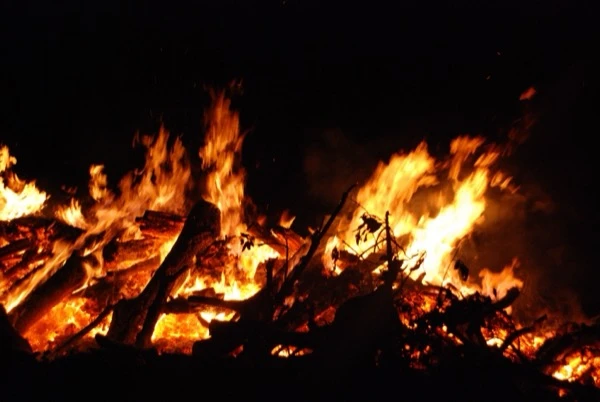
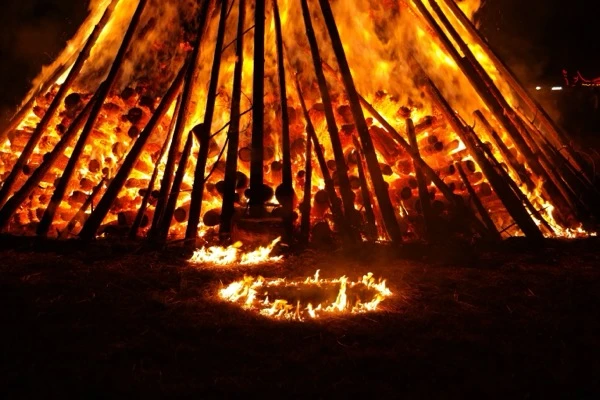
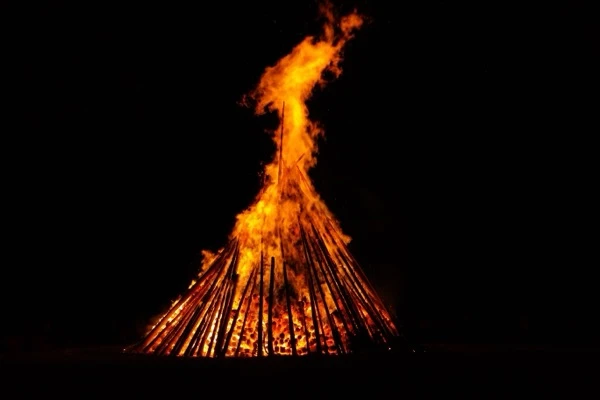
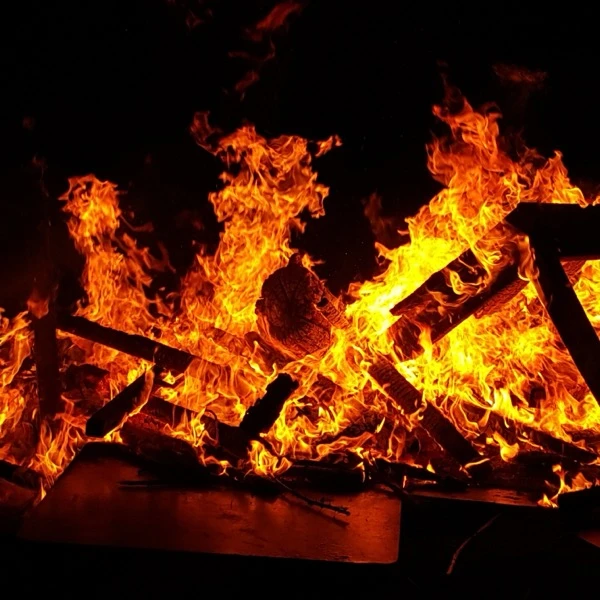
Fire is the spine of the entire night. The old belief holds that flame burns away negative energy - the bad luck, the bad relationship, the year you'd rather not repeat. Bonfires still appear on Valencia's beaches, though the city has tightened safety regulations considerably in recent years, so don't expect the unregulated free-for-all of decades past. What you'll see instead is still genuinely impressive: organized fires, small and large, dotting the sand for kilometers.
Burning Your Wishes
A specifically lovely tradition: write down what you want for the year ahead. A wish, a goal, something you want to let go of. Then burn the paper in one of the fires, or fold it and throw it into the sea. The belief is straightforward - committing it to fire or water gives it a better chance of actually happening. It sounds sentimental written down. It feels different standing on a beach at midnight actually doing it.
The Midnight Swim
The signature moment of the entire festival. At midnight, the crowd moves toward the water - not gradually, but in a kind of collective surge that you feel coming before it happens. Thousands of people enter the Mediterranean simultaneously, clothes and all for most people, to wash away whatever needs washing away and start the next stretch of the year clean.
Jumping Seven Waves
A regional variation worth knowing: in some traditions you jump over a set number of waves for luck - three, seven, or nine depending on where in Spain you are. In Valencia, seven waves is the most common version. Each jump is supposed to carry its own piece of good fortune. Whether or not you believe it, jumping waves at midnight with a few thousand strangers doing the exact same thing has its own kind of magic regardless of the metaphysics.
How the Night Actually Unfolds
- 6pm–9pm: Families and friend groups start claiming beach territory. Picnics get laid out. Coolers get opened. The mood is closer to a long, relaxed barbecue than a festival at this point.
- 9pm–11:30pm: The beach fills properly. Music starts up from multiple directions at once - street performers, portable speakers, the occasional full sound system someone's hauled down from a car. Dancing starts without anyone formally deciding it should.
- Midnight: The actual climax. Wishes get written and burned. The crowd moves to the water. This is the moment everyone came for, and it's worth being positioned somewhere you can actually move toward the sea when it happens rather than stuck behind a wall of people.
- After midnight: The party doesn't end, it just changes shape. Live music continues. Dancing continues. Families with younger kids tend to drift home around this point; everyone else settles in for what's effectively an all-night beach gathering that runs until the sun comes up over the Mediterranean, which on June 24th happens disturbingly early.
What to Actually Expect in 2026
Valencia's city authorities typically release the specific official program closer to the date, but based on recent years you can reliably expect:
- Increased security presence along the main beaches
- Extended public transport hours, including additional night services
- Organized cultural events and music along the seafront
- Designated, regulated bonfire areas rather than unrestricted fires
- Emergency services stationed along the beach for the night
Because this is one of the city's biggest nights of the year, accommodation in beachside neighborhoods books out well in advance. If you're planning to be in Valencia for San Juan, sort your hotel or apartment by spring at the latest - late booking means settling for somewhere a tram ride from the actual action.
Practical Advice for Surviving (and Loving) the Night
- Arrive early. Genuinely early - by 9pm the good spots on Malvarrosa and Las Arenas are mostly claimed.
- Take public transport, not a car. Parking near the beaches on San Juan night ranges from difficult to actively impossible. Valencia's tram and bus network runs extended service specifically for this reason - use it.
- Travel light on valuables. Dense crowds, dark beach, water everywhere - leave the expensive jewelry and most of your cash at home. Bring what you need, nothing more.
- Bring a light jacket. It's late June, it's the Mediterranean, and it still gets noticeably cooler by the water after midnight than the daytime heat suggests it will.
- Treat it with the respect it deserves. For a huge number of Spaniards, this isn't just a party, it's a meaningful cultural and personal ritual. Join in fully, but pay attention to what's actually happening around you rather than treating the whole night as a backdrop.
San Juan With Kids: Valencia's Family-Friendly Side
Valencia handles this festival with more family infrastructure than most cities manage for an event this size. Kids generally love the bonfires from a safe distance, the music, the general electricity of the night, and the lanterns and light displays that several beach areas put on specifically for younger attendees.
Families tend to arrive earlier in the evening and choose the calmer stretches of beach - Patacona or the southern beaches near the Albufera - rather than fighting for space at Malvarrosa's most packed sections. It's entirely possible to give a child their first San Juan memory here without anyone needing earplugs.
Wondering whether Valencia's beach culture and festival calendar would suit your own move to Spain? Take the Life Assessment to find the Spanish region that fits how you actually want to live.
Start Life Assessment →What San Juan Means If You're Living in Spain
For a lot of expats in Spain, San Juan ends up being the night that actually cracks something open. You can read about Spanish culture, study the language, learn the football rivalries and the regional politics, and still feel like you're watching the country from outside a window. San Juan doesn't really allow that distance.
You're not watching a procession from behind a barrier. You're in the water with everyone else, jumping the same seven waves, writing the same kind of wish on the same kind of paper, watching the same fires. People who've gone through it consistently describe a shift afterward - a sense of having actually joined something rather than just observed it.
If you're newly relocating to Spain and trying to find your footing in your first year, putting San Juan on your calendar isn't optional. It's one of the fastest, most genuine ways into the culture you've moved into.
How San Juan Differs From Spain's Other Big Nights
Compared to Las Fallas, Semana Santa, or Sevilla's Feria de Abril, San Juan carries a fundamentally different energy. Those festivals run on structure - processions with fixed routes, formal religious observance, sculptures built over months and judged by committees. San Juan runs on participation instead.
There's no spectator section. No official program you're watching from outside. Local, tourist, expat, family with toddlers, group of twenty-somethings who flew in for the weekend - everyone does the same thing on the same beach at the same midnight. That openness is exactly why it's one of the more democratic, atmospheric nights on the entire Spanish calendar, and one of the best nights in Spain if you want a festival that doesn't ask you to stand on the sidelines.
Where to Stay for San Juan in Valencia
- El Cabanyal - the historic fishing neighborhood right by the beach. Narrow streets, genuine local character, walking distance to Malvarrosa. The most atmospheric choice if you want to feel embedded in the maritime side of the city.
- Poblats Marítims - the broader seafront district, maximally close to the main beach action. The practical choice if proximity to the festival is your top priority.
- Ruzafa - Valencia's trendiest neighborhood, full of good restaurants and bars, with solid tram connections to the coast. A smart base if you want a great neighborhood to come back to after the beach, rather than sleeping right on top of the noise.
For more on the city beyond this one night, see our guide to hidden gems in Valencia.
Is It Worth Building a Trip Around San Juan Specifically?
Yes. Without much hesitation. San Juan shows you a version of Spain that the postcard attractions don't - open, emotional, deeply communal, unselfconscious in a way that's hard to manufacture. It's fire and seawater and centuries-old superstition operating alongside modern city life on the same stretch of sand, all at once.
If you're trying to find the best time to go to Spain for something that captures the country at its most genuinely itself - not staged, not performed for visitors, just actually happening because it's always happened - the night of June 23rd into 24th on Valencia's beaches is one of the strongest answers available anywhere in the country.
The Short Version
- One of the most genuinely magical nights of the Spanish summer
- Thousands of people on the Mediterranean shoreline at once
- Ancient traditions of fire and water, still fully alive
- A rare festival with no real spectators - everyone participates
- One of the most direct ways to experience Spanish culture from the inside, not the outside
For a lot of travelers, San Juan ends up being the single memory that defines their trip to Spain, and the reason they start planning their return before they've even left the beach.