
Extremadura sits tucked against the Portuguese border like Spain’s attic - the expansive, quiet place where the country stores the things nobody has thought about in decades. It is the poorest, emptiest, and arguably the most misunderstood major region in the country.
We spent two months living between Cáceres and Mérida last spring. We arrived with the intention of seeing what Spain looks like when the polishing hand of international tourism hasn’t touched it. What we found wasn’t the depressing backwater some had described; it was a revelation of a different pace of life. Extremadura is empty, certainly, but it is also exceptionally beautiful in a stark, uncommercial way that feels like a form of time travel.
Cáceres: The Secret Medieval City
Cáceres possesses a walled old town that has been a UNESCO World Heritage Site since the mid-eighties, yet it somehow manages to feel like a private discovery. The historic center is a dense knot of palaces, towers, and cobblestone alleys where the geometry of the streets was determined by donkeys rather than architects. It is one of the best-preserved medieval quarters in Europe. On a random Tuesday in April, we wandered those stones for nearly an hour and encountered exactly six other people.
The history here is heavy. Many of the most famous conquistadors - Pizarro, Cortés, Orellana - hailed from this hard, sun-baked land. They were poor soldiers who left for the New World to find the fortune Extremadura couldn’t provide, eventually sending back gold to build the Renaissance monuments that still define the city’s skyline.
For digital nomads in Spain who find the prices of Barcelona or the crowds of Malaga claustrophobic, Cáceres is a financial anomaly. We rented a spacious two-bedroom apartment in the modern part of town for just €380 a month. A three-course menú del día, including a bottle of local wine, cost us €10. The wifi in the local cafes was consistently reliable, as the regional government has been quietly upgrading infrastructure to attract remote workers.
The Spain Digital Nomad Visa is an incredibly powerful tool here. Because the cost of living is the lowest in the country, you aren’t just surviving; you’re living exceptionally well. A couple can navigate a comfortable existence on €1,000 a month, a figure that would barely cover rent in the larger Spanish capitals.
Mérida: The Roman Capital in Plain Sight
Mérida was once the capital of Roman Lusitania, and the ruins left behind rival nearly anything you will find in Italy. The Roman theater is still an active stage, the amphitheater sits just across the path, and a bridge over the Guadiana River has been in continuous use for two millennia.
The striking thing about Mérida compared to the Colosseum is the accessibility. There are no velvet ropes, no hawkers selling plastic Gladiators, and no crushing queues. The ruins sit in a living city of 60,000 people who treat 2,000-year-old monuments as a mundane part of their commute. We spent three weeks there in May, renting an apartment for €420. Our afternoons were spent reading in the stands of the Roman theater. It felt like living in a museum where the curators had gone home and left us the keys.
For expats in Spain doing a Spain lifestyle comparison between regions, Mérida represents a specific extreme: maximum historical weight paired with rock-bottom prices. The trade-off is that the “infrastructure“ is basic. The job market is stagnant, the social scene is anchored by local taverns rather than trendy clubs, and the nearest airport in Badajoz offers only a handful of connections.
Explore festivals, fairs, and cultural celebrations across Extremadura.
Extremadura EventsThe Dehesa and the Conquistador Towns
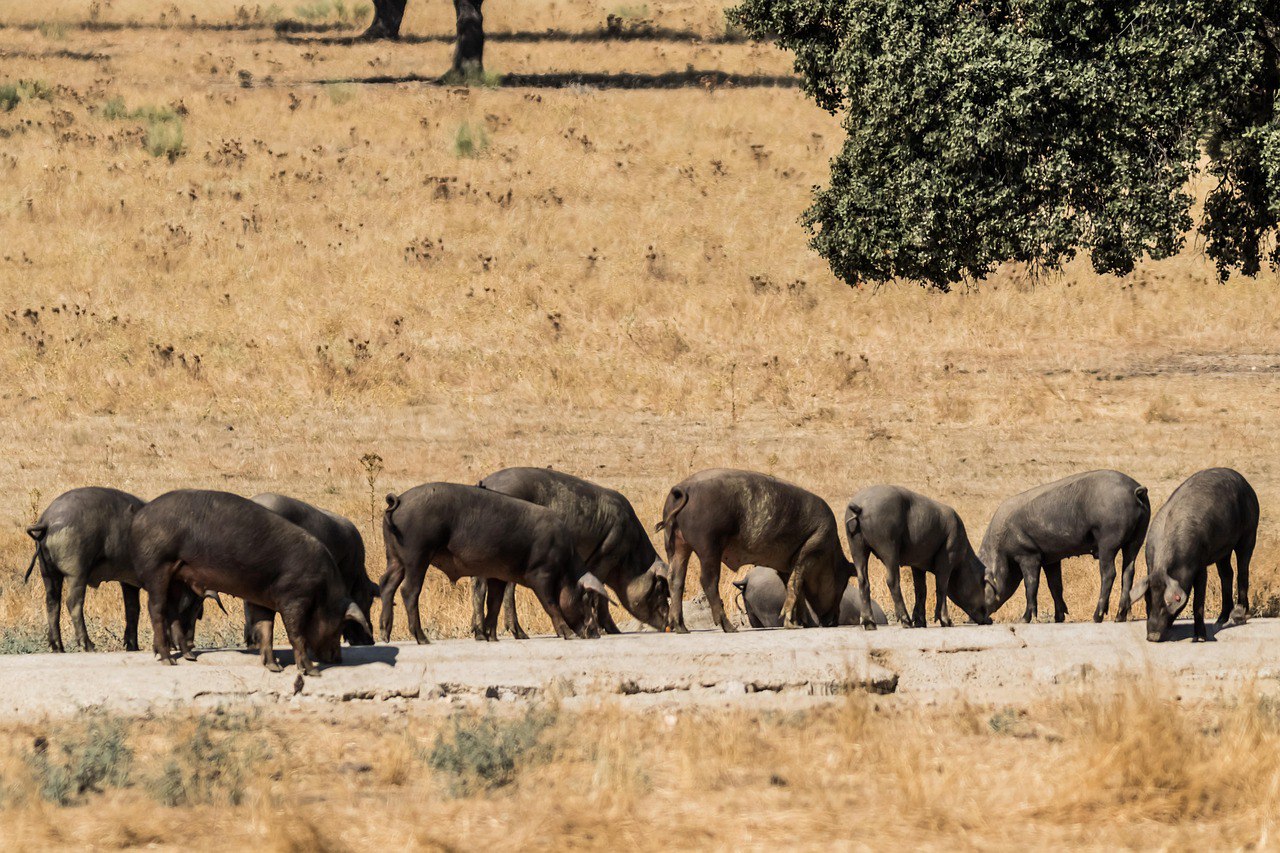
If you want to understand the soul of Extremadura, you have to look at the pigs. The region produces the bulk of Spain’s jamón ibérico de bellota - the world-class ham from black pigs that roam the oak forests eating fallen acorns. We drove through the Sierra de Tentudía in October during the montanera (the fattening season). The silence of that landscape is so absolute it can feel almost oppressive.
Villages in these areas are slowly fading. You will find populations of 200 people, bars that open only when the owner feels like it, and a pace of life that is dictated by the seasons rather than the clock. However, in Trujillo - the birthplace of Francisco Pizarro - that history feels alive. The Plaza Mayor is one of the most beautiful squares in Spain, dominated by a massive bronze statue of the conqueror. We sat there on a Saturday afternoon with a plate of local cheese and a glass of wine for prices that felt like a clerical error from 1985.
For anyone relocating to Spain and seeking isolation without total abandonment, Trujillo is a fascinating choice.
Living in the “Empty Quarter“: The Reality
Extremadura is not a “lifestyle“ product in the way the Costa del Sol is. There is no expat bubble here. During our two months, we met exactly three other foreigners. Integration isn’t an option; it’s a requirement. You will need to speak Spanish, and you will need to adjust to the fact that things close for the siesta and sometimes simply don’t reopen until the next day.
Practical Considerations:
- Food: The cuisine is hearty and built on pork and pimentón (paprika). Don’t miss the Torta del Casar, a sheep’s milk cheese so creamy it has to be eaten with a spoon.
- Health and Air: The air quality is pristine, largely because there is no industry. The healthcare system is public and functional, though facilities are often more modest than those in Madrid.
- Connectivity: While the cities have fiber, rural Extremadura can be a dead zone. Verify your connection before signing a lease in a mountain village.
The best time to go? For Extremadura, you must aim for April to May or September to October. The summer is a “furnace“ where 40°C is a standard afternoon, and winter can be surprisingly damp and lonely as rural towns go into hibernation.
Ultimately, Extremadura is poor, empty, and ignored for reasons that are both unfair and entirely logical. It isn’t convenient. It isn’t glamorous. But it offers a version of Spain that is entirely authentic. If you want the beach and the nightlife, you’ll be miserable here. But if you want space, silence, and a cost of living that allows you to stop worrying about money and start focusing on the horizon, this is the “Empty Quarter“ you’ve been looking for.
Best time to visit: April to May or September to October. Summer is a furnace where 40°C is a standard afternoon, and winter can be surprisingly damp and lonely as rural towns go into hibernation.
Thinking of relocating to Extremadura? Set your priorities — climate, cost of living, healthcare, culture — and discover where your lifestyle truly fits best.
Start Life Assessment →