
Catalonia occupies the northeast corner of the Iberian Peninsula like a high-achieving, slightly aloof relative who is technically part of the family but would really prefer you didn’t ask too many personal questions. It speaks its own language, flies its own flag, and operates with a collective chip on its shoulder roughly the size of the Pyrenees. While Barcelona tends to vacuum up all the international attention, the region itself is far more expansive than its overcrowded capital - a landscape of volcanic parks, rugged coves, and mountain valleys that feel a world away from the selfie-sticks of Las Ramblas.
We spent five months traversing the region last year, from the high peaks of the Val d’Aran to the Roman stones of Tarragona. We went in thinking we were “done“ with Catalonia’s relentless tourist circus, but we came away realizing that the circus is only in town if you stay in the main tent. If you know where to look, and more importantly, when to leave, Catalonia reveals itself as one of the most functional and rewarding corners of the Mediterranean.
Barcelona: The Paradox of Success
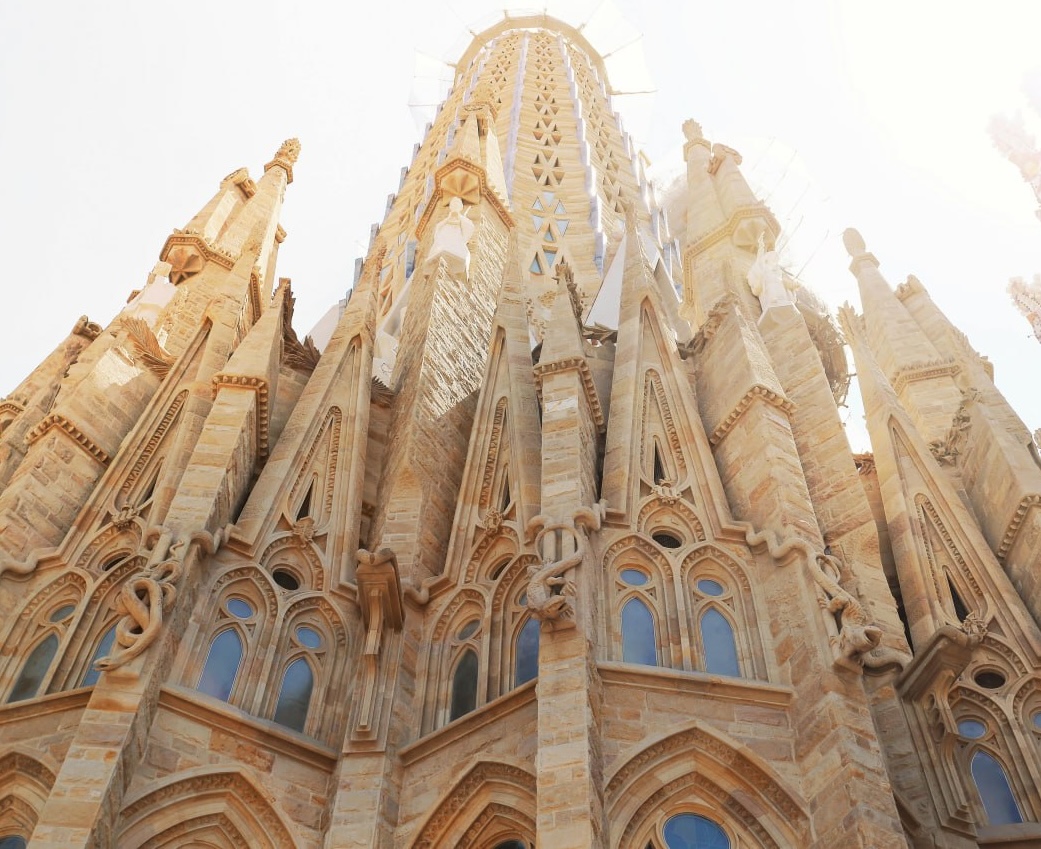
It is impossible to discuss traveling in Spain without addressing Barcelona. It is simultaneously the most extraordinary and most exhausting city in the country. Gaudí’s architecture doesn’t look like it was built; it looks like it erupted from the earth in a fever dream of organic curves. You have a world-class beach running parallel to a gothic labyrinth, and a food scene that sets the global bar for innovation.
However, Barcelona is currently buckling under its own popularity. We lived in the Gràcia neighborhood for three months - a spot that still manages to feel like a village tucked inside a metropolis - and our strategy was simple: pretend the rest of the city didn’t exist. The Gothic Quarter is undeniably beautiful, but it’s also an Olympic-level training ground for pickpockets and a stage for the same Instagram photo being taken ten thousand times a day.
For digital nomads in Spain, the city is a paradox. The infrastructure is flawless - fiber internet is as common as oxygen, and the co-working spaces are some of the best in Europe. The Spain Digital Nomad Visa is popular here, but you have to be prepared for the “Barcelona Premium.“ Rent for a one-bedroom in a decent district will easily run you €1,000 to €1,500, and a simple coffee that costs €1.20 in the south will be €3.00 here. You’re paying for the brand, and the brand is expensive.
Girona: The Smarter, Quieter Sibling
If Barcelona is the flamboyant overachiever, Girona is the sibling who stayed home, got a PhD, and lived a much more balanced life. Located just an hour north, Girona manages to offer everything the capital lacks: it is compact, walkable, and maintains an authentic Catalan soul that doesn’t feel like it’s being performed for a fee.
The Jewish Quarter, or El Call, is one of the best-preserved medieval neighborhoods in Europe, and the Onyar River - lined with brightly painted houses - gives the city a chromatic energy that is genuinely photogenic without being staged. For expats in Spain weighing a Spain lifestyle comparison, Girona is often the “eureka“ moment. You get the same world-class connectivity (the high-speed train to Barcelona takes 40 minutes) but without the crushing crowds. Rent is more human-scale, typically between €800 and €1000, and the food scene is world-class; this is the home of El Celler de Can Roca, frequently cited as the best restaurant on the planet.
Explore festivals, fairs, and cultural celebrations across Catalonia.
Catalonia EventsCosta Brava: Rugged Defiance
The Costa Brava runs from the city to the French border, and it is a testament to Catalan stubbornness that it hasn’t turned into a wall of concrete hotels. The coastline is jagged and “brave“ (as the name implies), broken by small coves (calas) with water so blue it looks like a digital filter.
Cadaqués remains the crown jewel - the whitewashed fishing village where Salvador Dalí lived. It is isolated at the end of a terrifyingly winding mountain road, which serves as a natural filter for the faint-of-heart. If you head further south to Begur or Palafrugell, you find beaches that require a twenty-minute hike down a cliff to reach. This is the best place in Spain to go if you want the Mediterranean as it was before the 1960s.
The Pyrenees and the Wine of Priorat
For anyone relocating to Spain who craves mountain air over salt spray, the Catalan Pyrenees are a serious contender. The Val d’Aran, in the far northwest, is a linguistic and cultural outlier where they speak Aranese (a dialect of Occitan) and the stone villages feel like they belong in the Swiss Alps. We found a two-bedroom apartment in a village of 200 people for €500 a month in the summer. The hiking is elite, and while the winter is brutal, the isolation is intoxicating.
And then there is the wine. Priorat, south of Barcelona, produces some of the most concentrated, expensive reds in the world from vines that grow in slate soil at impossible angles. It is a dramatic, scorched landscape that takes wine-making to a level of religious devotion. If you prefer bubbles, the Penedès region is the home of Cava.
The Language and the Lifestyle
The best time to go to Spain, specifically Catalonia, is May-June or September-October. This avoids the summer “canícula“ (heatwave) and the worst of the human congestion.
You also have to address the language. In Catalonia, Catalan is the primary language of schools, government, and daily life. While everyone is bilingual in Spanish, insisting on only speaking Spanish can occasionally be met with a polite but noticeable coolness. We found that learning even twenty basic phrases in Catalan acted like a magic key; the moment you say “Bon dia“ instead of “Buenos días,“ the social barriers dissolve.
Choosing Catalonia is choosing efficiency. It feels more “European“ than the rest of Spain - things run on time, the siesta is shorter, and the public services actually function. It is expensive, politically complicated, and occasionally a bit arrogant, but what you get in return is a region that has mastered the art of living well. Whether you are seeking a Roman amphitheater in Tarragona or a hidden beach in the Empordà, Catalonia offers a version of Spain that is unapologetically its own.
Best time to visit: May through June or September through October. This avoids the summer heatwave and the worst of the tourist congestion.
Thinking of relocating to Catalonia? Set your priorities — climate, cost of living, healthcare, culture — and discover where your lifestyle truly fits best.
Start Life Assessment →