
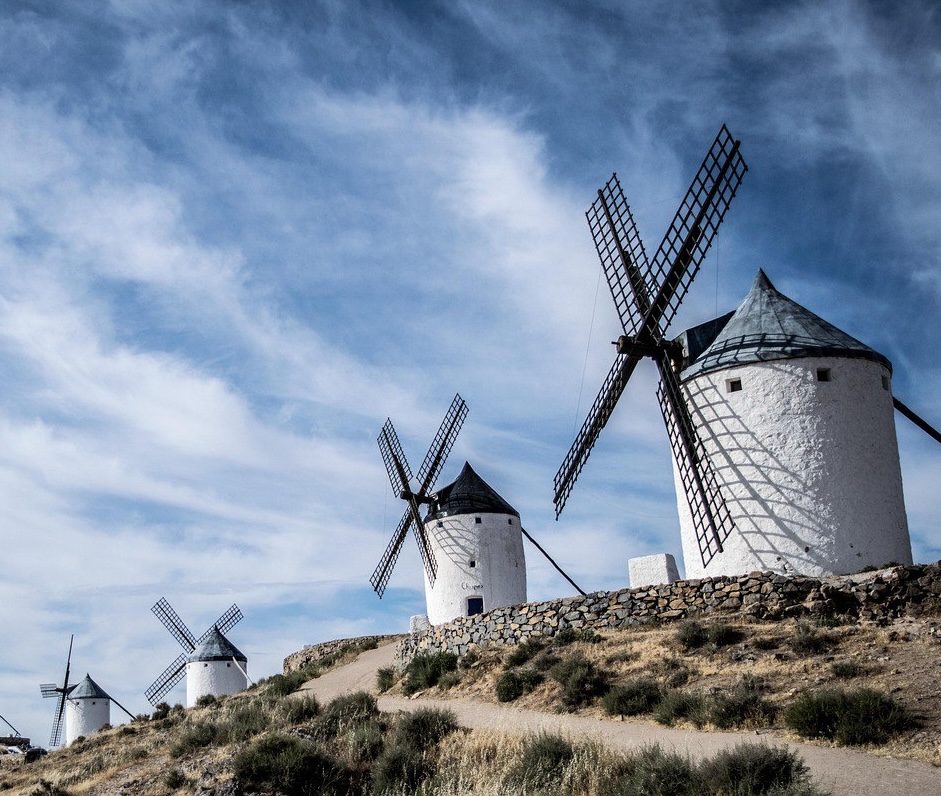
Castilla-La Mancha is that expansive stretch of the Spanish map that most travelers only experience as a blur through a high-speed train window on their way to the Mediterranean. It is a massive, high-altitude plateau, a terrain that can feel almost hostile in its sheer emptiness. Here, the landscape flattens into an endless horizon of wheat fields and olive groves, punctuated by the white cylinders of windmills that once drove Miguel de Cervantes to literary immortality. It possesses an austere, rugged beauty that admittedly doesn’t always photograph well, but it has a way of getting under your skin if you’re patient enough to listen to the silence.
We spent two months living in Toledo last autumn. We had reached a point where the crowded coastal corridors of Spain were starting to feel a bit claustrophobic, and we wanted something with more bone and less skin. Everyone we spoke to warned us we’d be bored within a week - that there was “nothing out there.“ They were wrong. Castilla-La Mancha is what you find when you strip away the polished tourism veneer and discover what Spain actually looks like when it isn’t trying to perform for an international audience.
Toledo: The City That Chose to Stay Still
Toledo sits perched on a granite hill, hugged on three sides by the Tagus River like a medieval fortress that simply never received the memo about the 21st century. Because the entire old city is a UNESCO World Heritage Site, it remains a labyrinth of stone and shadow. While that designation sounds prestigious, the local reality is that it makes modernity a headache; every building renovation requires permits that move at a glacial pace and cost a small fortune.
But for the traveler, that stagnation is a gift. Toledo hasn’t been “Disneyfied.“ The streets are genuinely, stubbornly medieval - steep, narrow, and designed for donkeys rather than tourists dragging oversized suitcases. This was El Greco’s home, a place where three religions - Judaism, Christianity, and Islam - coexisted for centuries, leaving a legacy of synagogues, mosques, and cathedrals all within a five-minute walk.
The Spain Digital Nomad Visa is particularly effective here. Because the cost of living is so much lower than on the coasts, you can qualify on a more modest income and actually save money rather than just treading water. You get the benefits of the capital’s proximity without the capital’s noise.
Tilting at Real Windmills
You cannot talk about this region without confronting the ghost of Don Quixote. The windmills are not just literary props; they are very real, white-washed giants scattered across the plains near Consuegra and Campo de Criptana. Cervantes used them as a symbol of madness, and today, while UNESCO protects them and tourists flock to photograph them, the true La Mancha remains just beyond the souvenir stalls.
Explore festivals, fairs, and cultural celebrations across Castilla-La Mancha.
Castilla-La Mancha EventsCuenca: The Defiance of Gravity
Cuenca is architecturally absurd in the best possible way. Imagine medieval houses built directly onto the limestone cliffs of a river gorge, hanging over the abyss as if the original builders were trying to win a bet against gravity. These Casas Colgadas (Hanging Houses) have stood since the 15th century, seemingly held up by nothing more than ancient masonry and collective prayer.
The old city is perched on a rocky outcrop between two deep gorges, which means getting around involves stairs. Thousands of them. This natural barrier keeps the massive tour bus crowds at bay; most people simply don’t have the knees for it. What you find instead are Spanish families on weekend retreats and the savvy expats in Spain who realized that Cuenca offers medieval drama without the Barcelona price tag.
The Unpretentious Wine Country
Castilla-La Mancha produces a staggering volume of wine - more than any other region in the country. For a long time, it was dismissed as the land of bulk wine, the stuff that ends up in supermarket boxes. However, the Valdepeñas DO and several boutique appellations are now producing reds and whites that would shock a Rioja loyalist.
If you are looking for the best time to go to Spain for wine tourism, aim for September or October. The harvest is in full swing, the brutal summer heat has finally broken, and the vineyards turn a deep gold against the red earth. Wine is treated as food - something you drink with lunch because that is what civilized people do.
Living Here: Substance Over Flash
Choosing to live in Castilla-La Mancha is a deliberate choice for substance over style. It offers one of the lowest costs of living in Western Europe. A couple can live quite comfortably on €1,500 a month, covering their rent, groceries, and regular weekend trips to the capital.
However, a Spain lifestyle comparison between the plateau and the coast reveals some hard truths. You are trading convenience for that affordability. While public transport exists, it isn’t extensive; you will almost certainly want a car to explore the “Black Architecture“ villages or the lagoons of Ruidera. The social scene is quieter, rooted in local bars where families have sat for generations. Integration takes effort; you are viewed with polite, quiet suspicion until you’ve shared enough coffee or wine to be considered part of the furniture.
The best places to live in Spain aren’t always the ones with the most palm trees. For those seeking the “real“ Spain - the one of slow harvest rhythms, hearty Pisto Manchego stews, and the crystalline bite of aged Manchego cheese---the high plateau is waiting. It doesn’t try to charm you with marketing or lifestyle dreams. It is simply there: vast, empty, and entirely authentic.
Quick Hits for the Explorer:
- Alarcón: A walled village on a rocky promontory with a population of only 150.
- Alcalá del Júcar: A stunning white village carved directly into a cliff face.
- Sigüenza: A town dominated by a massive cathedral and a castle that looks like it belongs in an epic poem.
The best time to go? April to May or September to October. Avoid the summer unless you enjoy 40°C heat, and avoid winter unless you have a very warm coat and a love for solitude.
Best time to visit: April to May or September to October. Avoid the summer unless you enjoy 40°C heat, and avoid winter unless you have a very warm coat and a love for solitude.
Thinking of relocating to Castilla-La Mancha? Set your priorities — climate, cost of living, healthcare, culture — and discover where your lifestyle truly fits best.
Start Life Assessment →