
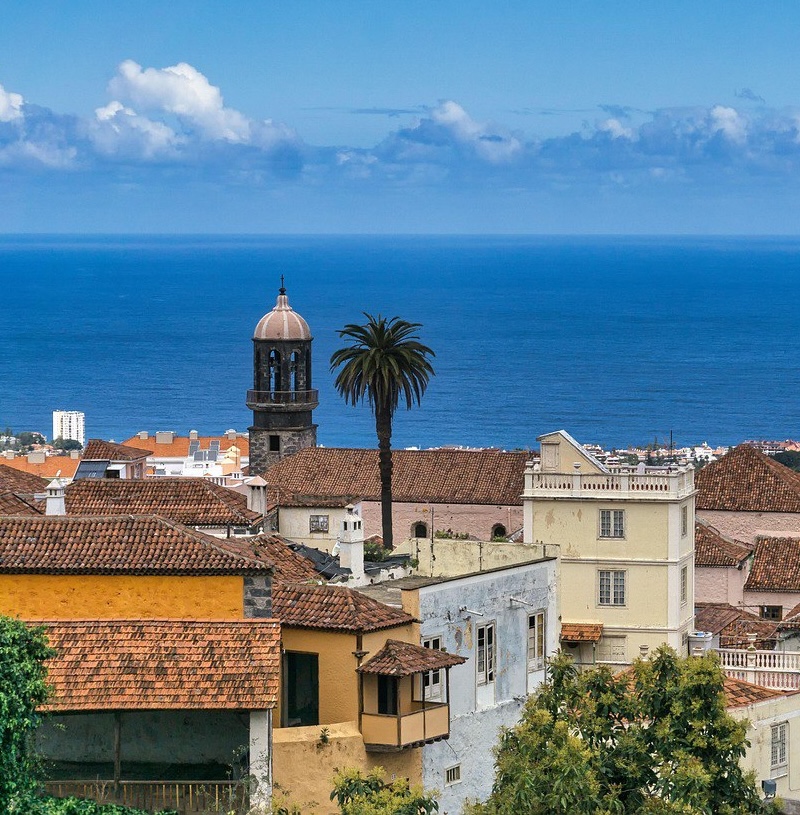
The Canary Islands float off the coast of Africa like Spain forgot to reel them back in. Seven volcanic rocks in the Atlantic, closer to Morocco than Madrid, operating on their own weather system and their own very specific idea of what it means to be Spanish. Which is to say: barely.
We spent six weeks bouncing between Tenerife, Gran Canaria, and Lanzarote last winter. What we thought would be a “warm weather escape“ turned into something closer to an existential recalibration. The Canaries don’t feel like Spain. They feel like what happens when you take Spanish bureaucracy, subtract the humidity, add year-round sunshine, and drop the whole thing into the middle of the ocean next to West Africa.
The “Eternal Spring“ Marketing Lie (That’s Actually True)
Every travel brochure calls the Canaries the “Islands of Eternal Spring,“ which sounds like the kind of thing a desperate tourism board invented after three gin and tonics. Except it’s annoyingly accurate.
The temperature barely moves. It’s 22°C in January. It’s 26°C in August. Christmas happens in shorts. For digital nomads in Spain who are tired of Valencia’s August swamp-heat or Barcelona’s tourist mobs, the Canaries are quietly becoming the move. We tested the wifi in about thirty cafes across three islands. Fiber internet is standard. Co-working spaces are multiplying. The cost? You’re looking at €700-€900 for a decent one-bedroom in Las Palmas, less if you go inland on Tenerife.
The Spain Digital Nomad Visa works beautifully here because the lower cost of living means qualifying is easier, and the timezone (GMT, not CET like mainland Spain) actually makes client calls with the UK and US more manageable.
Tenerife: The Island With an Identity Crisis
Tenerife can’t decide what it wants to be. The south is sunburnt sprawl - British package tourists, Irish pubs, and beaches that look like poured-sand-over-concrete. Playa de las Américas is what happens when developers run wild.
But drive north and you’re in a different country. The Anaga Mountains are green, jagged, wrapped in Atlantic fog. These are laurel forests that predate the Ice Age. Villages where nobody’s in a hurry. And then there’s Teide. Spain’s tallest mountain, a 3,718-meter volcanic cone visible everywhere. We hiked it at sunrise - 2 AM start, headlamp, freezing wind. By the time the sun came up, we were above the clouds looking down at white ocean with the mountain’s shadow stretching to La Gomera.
Santa Cruz de Tenerife is weirdly functional for expats in Spain who want infrastructure without chaos. Opera house, art scene, and a Carnival that rivals Rio. The locals are friendly in that Canarian way - polite, helpful, but not particularly interested in friendship unless you’ve been here five years.
Explore festivals, fairs, and cultural celebrations across Canary Islands.
Canary Islands EventsGran Canaria: The Mini-Continent
Gran Canaria calls itself a “miniature continent,“ which sounds like marketing nonsense until you actually drive around it. You go from Saharan sand dunes in Maspalomas to pine forests in the interior to dramatic cliffs on the west coast in about two hours. The island has fourteen microclimates on a rock that’s fifty kilometers across.
Las Palmas is one of those rare Spanish cities that actually works year-round. It’s not a tourist trap pretending to be a real place. People live here, work here, raise kids here. The beach (Las Canteras) runs for three kilometers through the middle of the city. We spent mornings working from cafes in Vegueta - the old quarter with cobblestones and buildings from the 1400s - then swimming in the afternoon like it was a normal Tuesday.
The Spain lifestyle comparison between the Canaries and the mainland is stark. Here, nobody’s trying to preserve some imaginary version of “authentic Spain.“ The islands are a mix: Spanish passport, African latitude, European infrastructure, and a whole lot of people from everywhere else who decided to stay.
Lanzarote: Mars on a Budget
Lanzarote looks like Mars. Black volcanic rock, zero trees, post-apocalyptic landscapes. The entire island is basically one big art project by César Manrique, who convinced the government in the 1960s to ban billboards and keep everything low-rise and whitewashed.
It worked. Lanzarote is weird, stark, and beautiful. Timanfaya National Park cooks chicken over geothermal vents. The wine country here is surreal. Vineyards in La Geria grow in volcanic ash, each vine in a small crater with stone walls for wind protection. The wines (mostly white Malvasía) taste lava-filtered. For anyone relocating to Spain and craving isolation without total disconnection, Lanzarote works.
Living Here: The Reality Check
Moving to Spain via the Canaries means the same visa rules as the mainland. Cost of living is lower than Barcelona or Madrid but higher than Andalusia. Groceries cost more - everything’s imported. Healthcare is solid with modern hospitals. Air quality is exceptional.
The expat community is massive: Germans in northern Tenerife, British retirees in southern Gran Canaria, digital nomads in co-working spaces. You can isolate or plug into ready-made networks. But the isolation is real. You’re on an island. Leaving requires a flight. Some people find this liberating. Others feel trapped.
Quick Hits:
- Garachico (Tenerife): Port town destroyed by lava in 1706, rebuilt with natural lava pools.
- Roque Nublo (Gran Canaria): Sacred rock formation of the original Guanche inhabitants.
- Jameos del Agua (Lanzarote): César Manrique cave complex with an underground lake.
The best time to go? For the Canaries specifically: November through April. You dodge the European summer crowds, the weather is perfect, and you’ll pay less for accommodation.
The Canary Islands won’t challenge you intellectually. They won’t offer deep cultural immersion or make you feel like you’ve cracked some secret code to Spanish life. What they offer is year-round sunshine, functioning infrastructure, and the ability to work from a beach without pretending it’s a profound lifestyle choice. Sometimes that’s exactly what you need.
Best time to visit: November through April. You dodge the European summer crowds, the weather is perfect, and you’ll pay less for accommodation.
Thinking of relocating to Canary Islands? Set your priorities — climate, cost of living, healthcare, culture — and discover where your lifestyle truly fits best.
Start Life Assessment →